Stadium guide · Rome, Italy
Stadio Olimpico
AS Roma and SS Lazio
- Capacity
- 73,000
- Opened
- 1953

Tickets
Every ticket for the Olimpico is personal, whichever club sells it, so travel with an identity document that matches the name. Rome’s two clubs share the ground and sell their tickets separately. AS Roma sells on its own website, asroma.com, while Lazio sells through the Vivaticket circuit, online and at Vivaticket points of sale.
Both clubs issue named tickets, and the gates check your ID against the name.
AS Roma
Official- Where
- Online at asroma.com, after registering a complete profile
- Season-ticket holders
- Get exclusive access to sales phases
- Ticket format
- Digital only: saved in Apple Wallet or Google Wallet
- Entry
- Phone against the turnstile reader; QR code as backup
- Name and ID
- The ticket is personal; carry valid ID with it
- Can’t go?
- Change the holder once per ticket, via the club
- Resale
- Season-ticket holders only (Plus, Classic Extra)
- Away tickets
- The club names the AS Roma Card as the card for buying them
SS Lazio
Official- Where
- Online through Vivaticket, and at Vivaticket points of sale
- Fidelity card
- Non-season-ticket holders can have the ticket loaded onto it
- Name and ID
- The ticket is in your name; ID is shown when buying
- At the gate
- Everyone’s ID is checked, children included
- Limit
- Four tickets per person in open sale
- Can’t go?
- The name can be changed, but never on away tickets
- Accessible
- Reduced tariffs sold only at Lazio Style 1900 shops
- On matchday
- Ticket window at the Via Nigra box, Stadio dei Marmi
AS Roma tickets
Register on asroma.com and complete your profile well before a sale opens, because the club requires it to buy. AS Roma issues a ticket only once the buyer’s personal details are on record. The club lists exclusive access to sales phases among the benefits of a season ticket.
Roma tickets bought on the club’s web channels are digital, and they must be saved in Apple Wallet or Google Wallet on your phone. At the turnstile, pick the ticket in the wallet and hold the back of the phone against the reader. Once saved, the NFC ticket works offline, and an Android phone without NFC shows a QR code for entry instead. The club’s ticket app asks for your MyASR account the first time you open it.
If you can’t go, tell the club before handing the ticket on: it passes to someone else only after AS Roma has registered the new holder’s details. The holder can be changed once per ticket. Reselling a seat through the app is reserved for Plus and Classic Extra season-ticket holders. For Roma’s away matches, the club names the AS Roma Card as the card to buy with.
Lazio tickets
A Lazio ticket is issued in the buyer’s name, so the club asks for valid ID when you buy. Buying in person at a sales point, you must show your document or no ticket is issued. In open sale one person may buy up to four tickets, a cap set by the national observatory on sporting events, and for the other three a copy of their ID is enough.
Holders of a Millenovecento or Eagle fidelity card who have no season ticket can ask, online too, for the ticket to be loaded onto that card. Lazio lets you change the name on a ticket, but never on a ticket for the away sector. The two reduced tariffs, for fully disabled fans and wheelchair users with a companion, are sold only in the Lazio Style 1900 shops. On matchday a ticket window opens at the Via Nigra box, beside the Stadio dei Marmi.
Lazio states that every spectator’s identity is checked at the entrance, minors included, so each person in your group needs a document.
Stadium tour and museum
The Stadio Olimpico Tour takes you into three dressing rooms, those of AS Roma, Lazio and the Italian football federation. It starts in the tunnel the team buses drive through, dressed as a Tunnel of Legends, then moves through the mixed zone, the trophy room, the pitch area and the stands. Groups go in every half hour with a guide, and the visit lasts about 40 to 45 minutes. You go only as far as a marked point in front of the benches, not onto the pitch itself.
Don’t book it for a matchday. The stadium is given over to staging the match, and the tour route is shut. Other events at the stadium can change the route.
Tour tickets are sold on the official Vivaticket site, and the tour has its own ticket office at Via dei Gladiatori 2. Visitors enter at the Tribuna Monte Mario, through the last gate under the Stadio Olimpico Tour sign on Viale dei Gladiatori. From Lepanto on Metro A, bus 301 runs to the LGT Cadorna stop, and you walk on to Viale dei Gladiatori. A free car park on Viale dei Gladiatori sits close to the tour entrance. Wheelchair users can reach the entrance, the tunnel, the mixed zone, the dressing rooms, the pitch and the bar.
- Duration
- About 40 to 45 minutes
- Starts
- Every half hour, with a guide
- Entrance
- Tribuna Monte Mario, Viale dei Gladiatori
- Matchdays
- No tour on matchdays
Book on the official site: we link straight to it and earn nothing from it.
Where to sit
The long sides of the Olimpico are two parallel stands, the Tribuna Tevere to the east and the Tribuna Monte Mario to the west. The Curva Nord and Curva Sud close the ends, built as two hemicycles.
Each club sells its own sectors, so the names on offer depend on who is at home. AS Roma’s price table lists sectors in the Curva Sud, the Distinti Sud Est, the Tribuna Tevere and the Tribuna Monte Mario. Lazio sells the Curva Nord and the Distinti Nord Est and Nord Ovest.
Fans with a disabled tariff for a person who cannot walk, and a permit, can park close to their stand. For the Tribuna Tevere Disabili that means the Stadio dei Marmi, and for the Tribuna Monte Mario Disabili it means Viale dei Gladiatori.
| Stand | Where | Who sits there |
|---|---|---|
| Tribuna Tevere | East side | The east-side stand; AS Roma and Lazio both sell tickets for it |
| Tribuna Monte Mario | West side | The west-side stand; AS Roma sells it, and Lazio sends its holders through Via dei Gladiatori |
| Curva Nord | North end | Lazio sells Curva Nord tickets; its holders enter through Piazza Piero Dodi |
| Curva Sud | South end | AS Roma sells Curva Sud tickets for its home matches |


Getting there
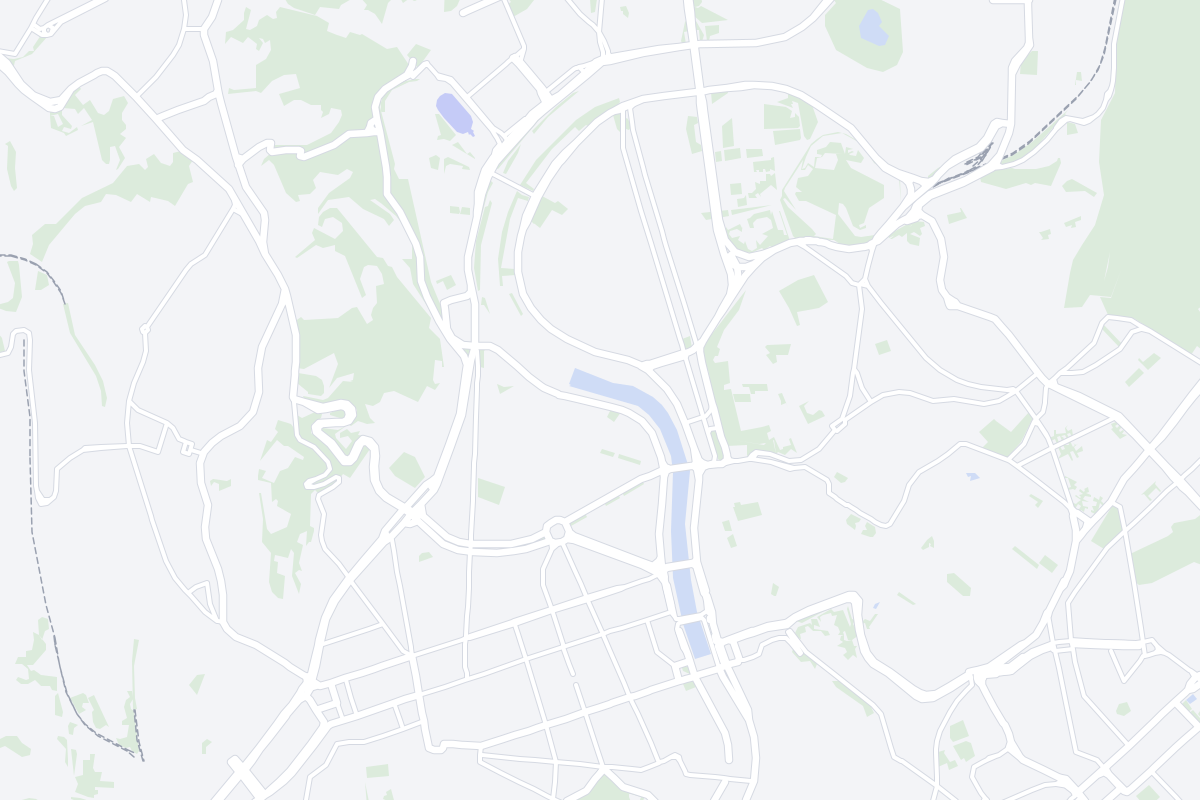
Ride Metro A, the red line, and finish by bus or tram: each of Lazio’s routes from the metro ends with a change. The stadium stands inside the Foro Italico park, in the north of Rome, 6 km from Roma Termini.
Lazio gives three changes from Metro A:
- Metro AOttaviano-San PietroMetro A, then bus 32 to the stadium
- Metro AFlaminioMetro A, then tram 2 to Piazza Mancini
- Metro ALepantoMetro A, then bus 280
- Tram 2ManciniTram 2 stop across the Tiber
- Bus 32Piazza Maresciallo GiardinoBus 32 stops a few metres from the stadium
- Ottaviano-San PietroBus 32 to Piazza Maresciallo Giardino or Ponte della Musica, a few metres from the stadium.
- LepantoBetween Ottaviano-San Pietro and Flaminio; bus 280 goes to the stadium.
- FlaminioTram 2 to Piazza Mancini, on the far bank of the Tiber from the stadium.
AS Roma lists buses 168, 280, 301, 32, 628 and 69 as stopping at the Olimpico. Bus 168 starts from its terminus at Roma Tiburtina station and ends at the Largo Maresciallo Diaz/De Bosis stop. For other journeys, the club points you to the ATAC journey planner.
From the stations and airports
These are Lazio’s routes, by where you arrive in Rome:
- Roma TerminiMetro A towards Battistini, then one of the changes above.
- Roma TiburtinaMetro B towards Laurentina as far as Termini, then Metro A towards Battistini.
- Roma OstienseMetro B from Piramide towards Rebibbia to Termini, then Metro A.
- Fiumicino airport40 km out; trains run to Termini, Ostiense and Tiburtina.
- Ciampino airportThe bus to Termini via Anagnina, then the metro.
Taxi, bike and car
Tell a taxi driver where to stop by your entrance. For the De Bosis or Dodi entrances, ask for Piazzale Maresciallo Diaz; for Gladiatori or Olimpiadi, ask for Piazzale Maresciallo Giardino. Bike racks are at Via Leopoldo Franchetti and at the Stadio dei Marmi, while spaces last.
Don’t expect to park at the ground. The car parks around it are for pass holders only, and AS Roma advises leaving the car further away. The club suggests Piazzale Clodio for the Gladiatori and Olimpiadi entrances, and Viale Tor di Quinto by the Salvo D’Acquisto barracks for De Bosis and Dodi. Around the Foro Italico, white lines mark free spaces and blue lines paid ones.
AS Roma sells dedicated parking between Via Tittoni and Viale Blanc for its home matches. The spaces are limited, so the club advises buying one together with your match ticket. With one of them, it suggests arriving up to two hours before kick-off. Coming in on the A1, follow the ring road (GRA) towards Flaminia, leave at exit 5 and follow the signs for the Foro Italico.
Where to stay
Pick a base on Metro A, the line all of Lazio’s metro routes to the Olimpico use.
- Area 1
Around Ottaviano-San Pietro
Ottaviano-San Pietro is a Metro A stop, and bus 32 from there stops a few metres from the stadium.
- Area 2
Around Flaminio
Flaminio is on Metro A, and tram 2 from there runs to Piazza Mancini, on the Tiber bank opposite the stadium.
- Area 3
Around Termini
Termini is 6 km from the stadium, and Metro A towards Battistini leaves from there, with Metro B to Tiburtina and Ostiense.
Around Ottaviano-San Pietro you are a single ride on bus 32 from a stop a few metres from the stadium. Around Flaminio, tram 2 takes you to Piazza Mancini, across the Tiber from the ground, and Lepanto lies between the two with bus 280.
Termini is 6 km from the stadium, yet it sits on Metro A towards Battistini, and trains from Fiumicino arrive there. From Ciampino the bus comes in to Termini via Anagnina. Roma Tiburtina has a link of its own: bus 168 runs from there to the Largo Maresciallo Diaz/De Bosis stop.
Leave your bags where you’re staying. Luggage is not allowed into the Olimpico, and there is no left-luggage near it.
Matchday
Check the entrance for your sector before you set off, because Lazio sends each part of the ground through its own gate:
- Via dei GladiatoriTribuna Monte Mario.
- Piazza Lauro De BosisTribuna Tevere and Distinti Sud Est.
- Viale delle OlimpiadiCurva Maestrelli.
- Piazza Piero DodiCurva Nord, Distinti Nord Est and Nord Ovest, and part of the Tribuna Tevere.
- Via Nigra, by the Stadio dei MarmiWheelchair spaces.
AS Roma strongly advises entering at the time shown on your ticket, to avoid crowding. A digital ticket is enough, with no need to print it, and you keep it until you have left the stadium. Keep valid ID with the ticket, because stewards can ask to see it. They may also search you, metal detectors included. Once in, take the seat you were assigned, even if others nearby are empty.
AS Roma’s stadium FAQ rules these out:
- luggage
- power banks, e-cigarettes and lighters
- pushchairs
- professional cameras
- umbrellas with a pointed tip
Everyday keys are fine, and crutches go in with a medical certificate showing you need them. You may take in food such as sandwiches or pizza, but no drinks in bottles or other containers. Drinks from cans or bottles are poured into paper or plastic cups, and anything stronger than 5 degrees is banned except where the authorities allow it for particular areas. On matchday a Roma Store inside the Foro Italico sells official products.
The stadium
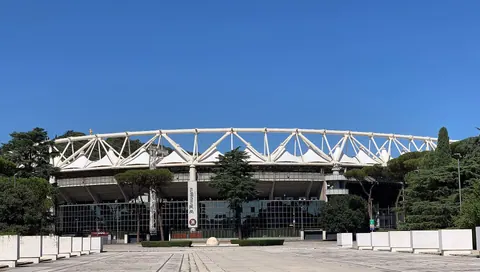
Work on the site began in 1928, and the ground was expanded in 1937. The stadium was officially opened on 17 May 1953 with Italy against Hungary, and it is home to both Lazio and Roma. Its 1950s design set the Tribuna Tevere and the Tribuna Monte Mario parallel on the eastern and western sides, with the two curves shaped as hemicycles.
The renovated stadium was completed in April 1990. Its roof is a Teflon and fibreglass membrane hung from 88 steel radial cables. On 8 July 1990 it staged the World Cup final, in which West Germany beat Argentina.
Champions League finals followed in 1996 and 2009. The single-leg Coppa Italia final has been played at the Olimpico since 2008, and since 2012 it has been the usual Six Nations venue for Italy’s rugby union team. The record crowd is 78,886, for Lazio against Foggia on 12 May 1974.


Facts
| Official name | Stadio Olimpico |
|---|---|
| Also called | Olimpico, Stadio Olimpico di Roma, Rome Olympic Stadium |
| Clubs | AS Roma and SS Lazio |
| City | Rome, Italy |
| Opened | 1953 |
| Capacity | 73,000 |
| Stations | Ottaviano-San Pietro, Flaminio, Lepanto, Mancini, Piazza Maresciallo Giardino |
| Coordinates | 41.93389, 12.45472 |
In our lists
- The biggest football stadiums — 12th of 112 by capacity
- The oldest football grounds — 54th of 112 by age
- Stadium tours and museums
- Clubs where members buy first
Map
- Stadio Olimpico
- Ottaviano-San Pietro
- Flaminio
- Lepanto
- Mancini
Sources
Every fact on this page comes from one of 19 sources, each read and checked in November 2026.
- AS Roma: FAQ stadioasroma.com · in Italian · retrieved 16 November 2026
- S.S. Lazio: Come si acquistano i biglietti (annuncio di vendita)sslazio.it · in Italian · retrieved 16 November 2026
- Wikipedia: Stadio Olimpicoen.wikipedia.org · in English · retrieved 16 November 2026
- S.S. Lazio: Stadio e Regolamentisslazio.it · in Italian · retrieved 16 November 2026
- AS Roma: Stadio Olimpicoasroma.com · in Italian · retrieved 16 November 2026
- AS Roma: Stadio Olimpico, regolamento d’usoasroma.com · in Italian · retrieved 16 November 2026
Show all 19 sources
- AS Roma: Biglietti e abbonamenti digitaliasroma.com · in Italian · retrieved 16 November 2026
- AS Roma: Biglietti prima squadra maschileasroma.com · in Italian · retrieved 16 November 2026
- Sport e Salute: FAQ (Stadio Olimpico Tour)sportesalute.eu · in Italian · retrieved 16 November 2026
- Sport e Salute: Il percorso (Stadio Olimpico Tour)sportesalute.eu · in Italian · retrieved 16 November 2026
- Sport e Salute: Info e biglietti (Stadio Olimpico Tour)sportesalute.eu · in Italian · retrieved 16 November 2026
- AS Roma: Parcheggi Stadio Olimpicoasroma.com · in Italian · retrieved 16 November 2026
- Wikidata: Stadio Olimpico (Q159884)wikidata.org · in English · retrieved 16 November 2026
- S.S. Lazio: Info e Norme U14sslazio.it · in Italian · retrieved 16 November 2026
- AS Roma: Bigliettiasroma.com · in Italian · retrieved 16 November 2026
- OpenStreetMap: Ottaviano (Metropolitana di Roma)openstreetmap.org · in English · retrieved 16 November 2026
- OpenStreetMap: Flaminio (Metropolitana di Roma)openstreetmap.org · in English · retrieved 16 November 2026
- OpenStreetMap: Lepanto (Metropolitana di Roma)openstreetmap.org · in English · retrieved 16 November 2026
- OpenStreetMap: Mancini (ATAC tram stop)openstreetmap.org · in English · retrieved 16 November 2026