Stadium guide · Hamburg, Germany
Millerntor-Stadion
FC St. Pauli
- Capacity
- 29,546
- Opened
- 1963

Tickets
Assume the match you want is sold out, and plan from there. Demand for home games is high, most of them sell out, and the club itself speaks of only a few freely available day tickets.
Most home games sell out, and the club says only a few day tickets are freely available.
FC St. Pauli
Official- Where
- The club’s online ticket shop
- Before you buy
- Set up a Mein St. Pauli profile: you cannot buy without one
- Members
- Usually a pre-sale right. League tickets are mostly sold to members only
- New members
- Pre-sales open only after three months of membership
- Sold out?
- The Ticket-Zweitmarkt, the club’s exchange inside the online shop, until three hours before kick-off
- Your ticket
- Digital only: show it on your phone or print it at home
- At the gate
- Carry an official identity document. Staff can ask to see it
Official routes only. The club says tickets resold on marketplaces are generally not valid, so we do not link to them.
The official place to buy is the club’s online ticket shop, and you can’t buy there without a Mein St. Pauli profile. A new customer can create the login during booking, after choosing seats.
Members come first. They usually have a pre-sale right on day tickets, and for league games tickets are mostly sold to members only. Joining just before your trip won’t get you into a pre-sale: it is open only to people who have been members for at least three months, with the membership linked in their profile.
Now and then the club also sells to non-members who have an order history, and it announces this in advance. It limits a sale that way, instead of opening it to everyone, for high-demand games among other cases. When tickets are on free sale with no restrictions, the match shows in the shop without logging in.
For a sold-out game, use the Ticket-Zweitmarkt, the club’s ticket exchange inside the online shop, where ticket holders offer their tickets to other fans. The club sets the prices, and describes them as fair. The exchange opens for a match only after the league has fixed the exact date and day-ticket sales have been announced. Sellers can list until three hours before kick-off, so it is worth looking again on the day. When a ticket is resold, the seller’s is blocked and you are issued a new one. VIP, away-block, wheelchair and honorary tickets cannot be resold there.
Keep to the shop and the exchange. Tickets traded on unauthorised platforms, of which the club names Viagogo and eBay, are generally not valid and won’t get you in. Paying an inflated price near the stadium can end the same way, with entry refused. At the gate the club can ask how you bought your ticket and what you paid for it. Carry an official identity document, such as an ID card or passport, and show it if the club or security staff ask.
Tickets ordered in the online shop are digital only. You can show one on your smartphone or print it at home, and it can be forwarded to someone else.
If you support the visiting team, stay out of the home areas. The club, the police and security staff can refuse away fans entry to them, or remove them, even with a valid ticket.
Wheelchair places are on the main stand, in areas R1, R2 and R3. Their day tickets are allocated by lottery among the orders sent to the club’s ticket centre, because demand is high and the capacity small.
Stadium tour and museum
The standard stadium tour lasts 120 minutes, and there is a shorter compact tour for visitors with less time. Both include free entry to the FC St. Pauli museum.
The tours cover more than 100 years of FC St. Pauli history, told in parts of the stadium that are otherwise hidden. They meet at the museum, which is inside the Gegengerade stand at Heiligengeistfeld 1.
Keep the tour and the match on separate days. Public tours don’t run on home match days, or while the team is playing away. Tickets can be ordered from the club’s tour page, and group tours can be arranged at any time on request.


- Standard tour
- 120 minutes
- Includes
- Entry to the club museum
- Starts
- At the museum, in the Gegengerade
- Match days
- No public tours
Book on the official site: we link straight to it and earn nothing from it.
Where to sit
Most places at Millerntor are standing places. Of 29,546 in all, 16,940 are standing and 12,606 are seats.
The home areas, stand by stand:
- South standBlocks S1 to S3 and standing areas A and B.
- GegengeradeSeated blocks G1 to G6 and standing areas C, D and E.
- North standSeated blocks N1 to N4 and standing area F.
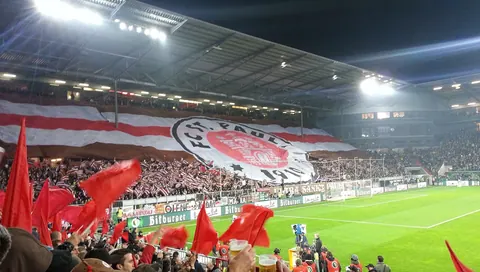
The south end, the Südkurve, is the fan curve: it was declared one, with organised support, from the 2007/08 season. The Fankurventicket Süd covers all league home games in the south stand’s standing area, and since 2024/25 the fan scene has allocated those tickets itself, to organised groups and fan clubs.
Anywhere in the home areas, waved flags can block your view. The club excludes complaints or compensation for that.
Away fans have standing and seated places in the north end, and enter through the Feldstraße entrance, by Feldstraße U-Bahn station. Business seats are on the main stand and the south stand. If you’re bringing young children, note that the standing areas are not recommended for those under 7.
| Stand | Where | Who sits there |
|---|---|---|
| South stand | South end | Blocks S1 to S3 and standing areas A and B. The Südkurve, the fan curve with organised support |
| Gegengerade | East side | Seated blocks G1 to G6 and standing areas C, D and E |
| North standAway | North end | Seated blocks N1 to N4 and standing area F. Away fans have standing and seated places at this end |
| Main stand | West side | Business seats, and the wheelchair places in areas R1, R2 and R3 |


Getting there
The U3 is the line for Millerntor. From Hamburg Hauptbahnhof, take it towards Schlump-Barmbek. The club describes the main station as only a few U-Bahn minutes from the stadium.
Get off at St. Pauli or Feldstraße; from either it is about three minutes on foot. The club matches the stop to the stand:


- U3St. Pauli3 min on footFor the Gegengerade and the south stand
- U3Feldstraße3 min on footFor the north stand and the away block
- S1S3U3Landungsbrücken15 min on footChange here from S1 and S3 to the U3
- North stand and away blockFeldstraße.
- Gegengerade and main standSt. Pauli or Feldstraße.
- Gegengerade and south standSt. Pauli.
Coming in on the S-Bahn, lines S1 and S3 bring you to Landungsbrücken, where you change onto the U3 towards Schlump-Barmbek. You can also walk from Landungsbrücken: the club gives it as about 15 minutes.
Buses 112, 16 and 17 stop at St. Pauli station, and the 3, X3 and 17 at Feldstraße U-Bahn station.
The club recommends coming by public transport, by bike or on foot, because the ground is central and parking is limited. There are a limited number of paid parking spaces on the Heiligengeistfeld. None of them can be used during the Hamburger Dom, the fairs held on the Heiligengeistfeld in spring, summer and winter. The club also describes parking in the district as tight all year.
Where to stay
The ground is in the middle of St. Pauli, between the bunker on Feldstraße, the Heiligengeistfeld open space and the Kiez entertainment quarter. Stay in the district if you want the stadium close.
- Area 1
St. Pauli
The stadium is in the middle of the district, and the club’s recommended U-Bahn stops are about three minutes on foot away.
- Area 2
Around Hamburg Hauptbahnhof
The main station is only a few U-Bahn minutes from the stadium on the U3 and is well connected to long-distance trains.
- Area 3
Landungsbrücken
Served by S-Bahn lines S1 and S3, with a change onto the U3, and about a 15-minute walk from the stadium.
Choose the Hauptbahnhof area instead if you arrive or leave by long-distance train: the club calls the main station well connected, and the U3 runs from it to the stadium. Landungsbrücken suits a stay that leans on the S-Bahn, because lines S1 and S3 meet the U3 there.
Suitcases are among the bulky items that may not be brought into the stadium, so leave yours at your accommodation before the match.
Matchday
Don’t bring food or drink: the stadium rules prohibit both, of any kind. Also on the banned list:
- bulky items such as ladders, stools, chairs, crates and suitcases
- bottles, cups, jugs or cans made of breakable, splintering or especially hard material
- animals, except assistance and guide dogs
- clothing tied to the far-right scene, whether worn or carried
Security staff at the entrance may search the things you carry. Keep an official identity document on you as well, since the club or security staff can ask to see it.
Children are admitted only with an adult until their 14th birthday.


The stadium
Work on the present stadium began in 1961 on the Heiligengeistfeld, after the club’s earlier ground had to make way for a garden show. It officially opened in 1963.
Between 2006 and 2015 the stadium was rebuilt in stages: one of the four stands at a time was demolished and replaced while the others stayed in use. The south end was rebuilt in 2007 and the main stand in 2010, which together added around 4,600 places. The Gegengerade followed in early 2013 and lifted the capacity from 24,487 to 29,063. The north stand was rebuilt between late October 2014 and late July 2015, and the capacity has stood at 29,546 since.
The club claims two firsts for the ground. A day nursery, the Piraten-Nest, is built into the corner between the main stand and the south stand, and the club says it was the first professional club in the world to put a nursery in its stadium. It also says Millerntor was the first stadium where racist or fascist chants were banned.
Facts
| Official name | Millerntor-Stadion |
|---|---|
| Also called | Millerntor, Millerntorstadion |
| Club | FC St. Pauli |
| City | Hamburg, Germany |
| Opened | 1963 |
| Capacity | 29,546 |
| Stations | St. Pauli (3 min on foot), Feldstraße (3 min on foot), Landungsbrücken (15 min on foot) |
| Coordinates | 53.55444, 9.96778 |
Map
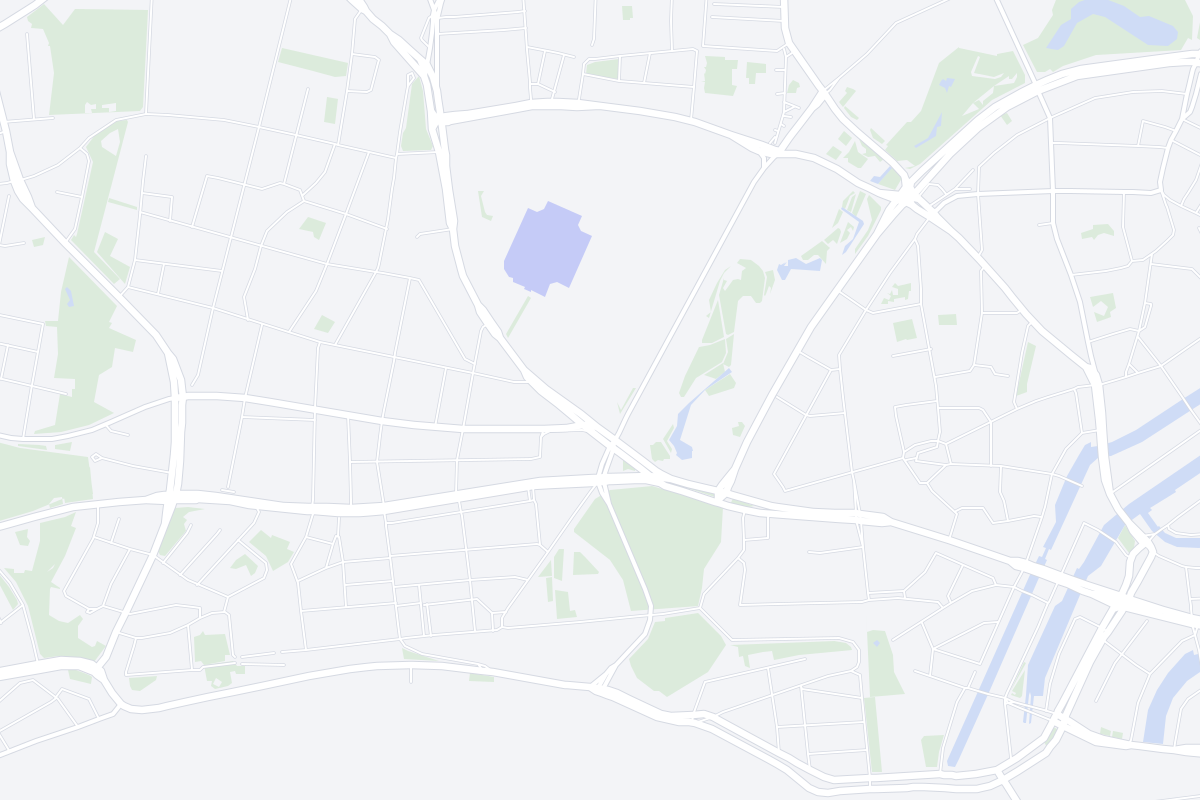
- Millerntor-Stadion
- St. Pauli
- Feldstraße
- Landungsbrücken
Sources
Every fact on this page comes from one of 22 sources, each read and checked in November 2026.
- FC St. Pauli: Anfahrtfcstpauli.com · in German · retrieved 14 November 2026
- FC St. Pauli: Millerntor-Stadionfcstpauli.com · in German · retrieved 14 November 2026
- FC St. Pauli: Zugangsdaten und Vorverkaufsrechtfcstpauli.com · in German · retrieved 14 November 2026
- FC St. Pauli: Stadionführung (MILLERNTOUR!)fcstpauli.com · in German · retrieved 14 November 2026
- FC St. Pauli: Stadionordnungfcstpauli.com · in German · retrieved 14 November 2026
- FC St. Pauli: Zweitmarkt Kauf und Verkauffcstpauli.com · in German · retrieved 14 November 2026
Show all 22 sources
- FC St. Pauli: Allgemeine Ticket-Geschäftsbedingungen (ATGB), Stand Juni 2026api.fcstpauli.com · in German · retrieved 14 November 2026
- FC St. Pauli: Schwarzmarkt und Tickethandelfcstpauli.com · in German · retrieved 14 November 2026
- Wikipedia: Millerntor-Stadionde.wikipedia.org · in German · retrieved 14 November 2026
- FC St. Pauli: Digitale Ticketsfcstpauli.com · in German · retrieved 14 November 2026
- FC St. Pauli: Fankurventicket Südfcstpauli.com · in German · retrieved 14 November 2026
- Wikidata: Millerntor-Stadion (Q339572)wikidata.org · in English · retrieved 14 November 2026
- FC St. Pauli: Inklusionsticketsfcstpauli.com · in German · retrieved 14 November 2026
- FC St. Pauli: Ticketsfcstpauli.com · in German · retrieved 14 November 2026
- FC St. Pauli: Räumlichkeitenfcstpauli.com · in German · retrieved 14 November 2026
- Wikidata: U-Bahnhof Feldstraße (Q2465884)wikidata.org · in English · retrieved 14 November 2026
- Wikidata: U-Bahnhof St. Pauli (Q826353)wikidata.org · in English · retrieved 14 November 2026
- Wikidata: S-Bahnhof Landungsbrücken (Q131632131)wikidata.org · in English · retrieved 14 November 2026
- OpenStreetMap: Way 34168814: Südtribüneopenstreetmap.org · in English · retrieved 14 November 2026
- OpenStreetMap: Way 52698258: Gegengeradeopenstreetmap.org · in English · retrieved 14 November 2026
- OpenStreetMap: Way 369968881: Nordtribüneopenstreetmap.org · in English · retrieved 14 November 2026
- OpenStreetMap: Way 52698260: Haupttribüneopenstreetmap.org · in English · retrieved 14 November 2026