Stadium guide · Rio de Janeiro, Brazil
Maracanã
Estádio Jornalista Mário Filho · Flamengo and Fluminense
- Capacity
- 73,139
- Opened
- 1950

Tickets
Register your face before you do anything else: at the Maracanã you get in by facial recognition at the turnstile, in every sector. Without a biometric registration on the portal your club names, you are turned away, even holding a ticket. Visiting supporters need one too. At the gate you look into the turnstile camera, and the system matches your identity to your ticket in seconds.
At the Maracanã every fan, home or away, needs facial biometrics registered before the match: your face is your way in, and tickets are personal.
Flamengo
Official- Where
- Online at ingressos.flamengo.com.br, the club’s ticket site
- Members first
- Sales open in waves by Nação Sócio-Torcedor plan and stars; the general public comes last
- Before you buy
- Register facial biometrics: without it the purchase option is not offered
- Getting in
- Facial recognition at the turnstile, via Bepass
- Resale
- None official: tickets are personal and non-transferable
- In person
- Possible at physical sales points, but with no purchase priority
Fluminense
Official- Where
- Online at futebolcard.com; members buy through a check-in there
- Members first
- Sales open to members before everyone else, by plan priority
- Before you buy
- Register facial biometrics at fluminense.bepass.com.br
- ID
- Passport or DNI for foreigners; the holder of every ticket is registered
- Getting in
- Facial recognition at the turnstile
- Resale
- None official: tickets are personal and non-transferable
Official routes only. The club says tickets resold on marketplaces are generally not valid, so we do not link to them.
The home club sells the tickets, not the stadium, and decides the channels, any priority for members and the price. So the first question is whose home game it is: Flamengo and Fluminense each run their own sale. Away fans buy through the home club’s channels as well.
Tickets here are personal and cannot be passed on. Because entry depends on your own face, handing a ticket to someone else is technically blocked, and the stadium says there is no official resale system. Buy each ticket for the person who will actually walk through the turnstile. Breaking the stadium’s rules can cost more than one match: besides removal, a fan can have the biometric registration blocked and be barred from buying tickets, for longer the more serious the offence.
Flamengo tickets
Flamengo sells its home games online at ingressos.flamengo.com.br. Members of its Nação programme buy first, in waves opened match by match according to their plan and the stars they hold. The club’s terms put the general public in wave 8, the last one, after the member waves. Even a member buys only in the order of priority of their plan, and within a cap on tickets per member.
Stars are earned. Every Nação Maraca plan awards one after 36 months in the programme, and Nação Maraca 2 members earn one by attending at least 4 of the last 5 matches at the Maracanã. Nação Maraca 1, the top plan, limits its number of holders so that each of them is sure of a ticket in their wave. For the last waves, those of Nação Maraca 2 and Nação Maraca 3, 10% of the tickets are always held back.
Set up the biometrics before the sale opens. A member without a valid registration is simply not offered the option to buy, and the registration is made on the Nação website, under BIOMETRIA in the menu. Members and their guests then enter Flamengo home games with Bepass facial biometrics.
Buying in person at a physical sales point is possible, but it gives up the purchase priority: the member keeps only the plan discount. The account and the tickets in it are personal to the member. Flamengo can warn or suspend a member for touting, or on well-founded suspicion of it.
Fluminense tickets
Fluminense also releases each Maracanã match to its members first, by the priority of their plan. Members buy through a check-in on the club’s FutebolCard site: you click the match, choose a sector on a map of the stadium and select the holder’s name for each ticket. The club’s sales to its own fans run on futebolcard.com.
The Fluminense biometric registration is at fluminense.bepass.com.br, where you fill in a few details and take a photo of your face and of an official document. Members, their dependants and non-members alike must register to get into the ground. When you later buy on FutebolCard, use the same name, ID number and email as in the Bepass registration.
Have your passport ready from the moment you buy. Fluminense asks foreign buyers for a passport or a DNI, and Brazilians for a CPF, on any type of ticket. Every purchase has to register the person who will hold each ticket, and each holder must carry the original photo document at the entrance.
Member discounts apply only to Fluminense home matches. A member can also buy at the discount at any open physical sales point, showing original photo ID and CPF.
Concessions, children and cancelling
Free or half-price entry for people over 60, children under 12 and disabled people follows the law, and has to be claimed in advance through the home club. At Fluminense the free tickets are only in the Sul and Norte sectors; elsewhere only the half-price rate applies. Children up to 7, or as the match regulations set, can get in with a QR code or a card. If you can’t go, a cancellation request generally has to be made 48 to 72 hours ahead.
Stadium tour and museum
The stadium portal puts the Tour Maracanã at 50 minutes. You go round at your own pace, through the dressing rooms, the press room, the pitch and an exhibition of the stadium’s history.
Book ahead, as the tour itself recommends. Tickets are sold by the official ticket seller or at the tour box office, which charges no convenience fee. On foot, the tour entrance is Gate A; drivers use Gate 2. The tour’s own directions are the metro to Maracanã station on Line 2.
Choose a day with nothing on at the stadium. On match and show days the hours can be cut and some areas closed, and the last visit then ends 5 hours before the gates open. The route has accessible paths, lifts and adapted toilets in some areas.
- Length
- About 50 minutes
- Pace
- At your own pace
- Entrance
- Gate A on foot, Gate 2 by car
Book on the official site: we link straight to it and earn nothing from it.
Where to sit
Where the away fans sit depends on which club is at home. At a Flamengo home game visiting supporters are in the Sul sector, entering by Gate B; at a Fluminense home game they are in Norte, through Gate E.
The bowl is split into four sectors, Norte, Sul, Leste and Oeste. Your ticket gives the sector, level and seat number. Four of the six levels are open to the public, N1, N2, N3 and N5, and six gates lettered A to F serve them. The signs run anti-clockwise, and you can already see them on the roads leading to the stadium.
Two special areas are in Oeste. The cadeiras cativas, the seats held by licence holders, are reached by Gate A on the UERJ ramp. Maracanã Mais has about 2,000 places, and its ticket includes a buffet with food and soft drinks. Sit in the seat numbered on your ticket, above all in those two areas, and don’t stand on stairs, ramps or emergency exits.
Every sector has spaces for wheelchair users and people with reduced mobility. The entrances planned for disabled fans are Gate A on the Oeste side, opposite UERJ near the metro ramp, and Gate D on the Leste side, on Avenida Maracanã. There are also soundproofed sensory rooms of 57 square metres for autistic people and their families, and their tickets come from the home club.
| Sector | Who sits there |
|---|---|
| NorteAway | Where visiting fans sit when Fluminense are at home, entering by Gate E |
| SulAway | Where visiting fans sit when Flamengo are at home, entering by Gate B |
| Leste | Gate D, on Avenida Maracanã, is the accessible entrance on this side |
| Oeste | Seat-licence holders (cadeiras cativas) and the Maracanã Mais premium area; Gate A is the accessible entrance on this side |
Getting there
Take metro Line 2, but pick the stop by who is at home. When Flamengo are at home, the stadium sends their fans to São Cristóvão, the station closest to Gate E; when Fluminense are at home, their fans go to Maracanã station, closest to Gate B. MetrôRio names that stop Rei Pelé – Maracanã, and both it and São Cristóvão have an exit signed for the stadium. From Maracanã station a walkway connects directly to the ground.
The stadium counts three metro stations for the ground, Maracanã, São Cristóvão and São Francisco Xavier, plus two train stations, Maracanã and São Cristóvão, and several bus routes. It calls public transport the most recommended option on event days. São Francisco Xavier is on Line 1, in Tijuca. Both Line 2 stations connect with TrensRJ suburban trains, and São Cristóvão also serves the Quinta da Boa Vista park.
Don’t count on being dropped at the door by car. There is no official ride-hailing point, so check the gate on your ticket and get out as near it as you can. Road closures around the ground usually begin 2 to 3 hours before kick-off. Ticket holders can buy a parking space at the Célio de Barros stadium, entering by Gate 11 on Rua Eurico Rabelo, where 400 spaces are offered subject to availability.

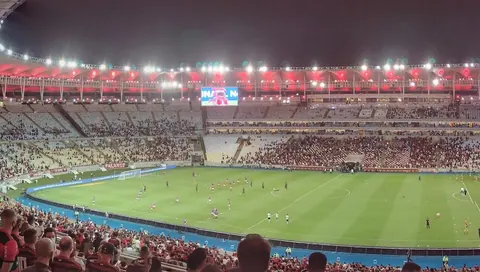
Photo: Alexandre M. B. Berwanger, CC BY-SA 4.0, via Wikimedia Commons

- Line 2Maracanã (Rei Pelé – Maracanã)Walkway to the stadium; Fluminense fans’ stop
- Line 2São CristóvãoFlamengo fans’ stop; closest to Gate E
- Line 1São Francisco Xavier / TijucaLine 1; one of three metro stations the stadium lists
- TrensRJMaracanãTrain station, linked to the metro
- SuperViaSão CristóvãoMain way out for the Zona Norte lines
After the match
Home fans leave first, in a steady flow from the final whistle. If you are with the visitors, expect to stay inside for 30 to 60 minutes until the area outside is safe. The stadium suggests waiting about 15 minutes in your sector anyway, since it can make the ramps and the metro much calmer. MetrôRio and SuperVia put on special services to move the crowd quickly. For the Zona Norte and Baixada Fluminense lines, the main way out is São Cristóvão train station.
Where to stay
Sleep somewhere on the metro, since the stadium itself recommends public transport on event days. Line 2 is the one to be near, because it stops at Maracanã.
- Area 1
Centro (Carioca)
Carioca is a transfer station between metro Lines 1 and 2, and Line 2 serves the Maracanã metro stop.
- Area 2
Botafogo
Botafogo is a transfer station between Lines 1 and 2, and Line 2 serves the Maracanã metro stop.
- Area 3
Tijuca
São Francisco Xavier, a Line 1 station in Tijuca, is one of the three metro stations the stadium names for getting to the ground.
Two stations where Lines 1 and 2 meet make easy bases:
- CentroCarioca is a transfer station between the two lines.
- BotafogoIts station is a transfer point between Lines 1 and 2 as well.
Tijuca is the third option. Its São Francisco Xavier station is on Line 1, and it is one of the three metro stations the stadium lists for the ground.
Leave your bags where you’re staying, because the Maracanã has no left-luggage service.
Matchday
Plan to reach your gate early. For football the gates open 2 hours before a regular match and 3 hours before derbies and finals, and they close at the end of the first half or the start of the second. Expect a search of arms, legs and waist carried out by staff of your own sex.
Pack for what the stadium allows:
- no food or drink bought outside the stadium
- no plug-in chargers or power banks
- flagpoles only if they are flexible plastic, up to 1 m long and 1 cm thick
Once your face has been validated at the turnstile, you can’t go out and come back in just to smoke. Smoking is banned in the stands, seats, corridors, toilets and every covered area.
The fixed bars inside take debit and credit cards, and cash as well. On high-risk matches the authorities can stop the sale of alcohol.
The stadium
The Maracanã opened on 16 June 1950, and it has since staged two World Cup finals and the opening and closing ceremonies of an Olympic Games. Its record crowd, 173,850, came on 16 July 1950. The club attendance record belongs to a Fla–Flu, the derby between Flamengo and Fluminense, which drew 194,603 in 1963.
Though in use from 1950, the stadium was only fully completed in 1965. Its official name honours Mário Filho, a sports journalist who had recently died when it was given in 1966. It was classified as a national landmark in 1998, which means it cannot be demolished.
The capacity has come down a long way. Conversion to all-seater in the late 1990s cut it sharply, and today’s figure is 73,139, still the largest of any stadium in Brazil. A major reconstruction began in 2010: the two-tier bowl came down and a mostly single-tier one replaced it, with seats in yellow, blue and white. The concrete roof gave way to a tensioned fibreglass membrane that covers 95% of the seats. The work readied the ground for the 2013 Confederations Cup and the 2014 World Cup, whose final it hosted.
Facts
| Official name | Estádio Jornalista Mário Filho |
|---|---|
| Also called | Maracanã Stadium, Estádio do Maracanã, Maraca |
| Clubs | Flamengo and Fluminense |
| City | Rio de Janeiro, Brazil |
| Opened | 1950 |
| Capacity | 73,139 |
| Stations | Maracanã (Rei Pelé – Maracanã), São Cristóvão, São Francisco Xavier / Tijuca, Maracanã, São Cristóvão |
| Coordinates | -22.91222, -43.23028 |
In our lists
- The biggest football stadiums — 11th of 112 by capacity
- The oldest football grounds — 53rd of 112 by age
- Stadium tours and museums
- Clubs where members buy first
Map
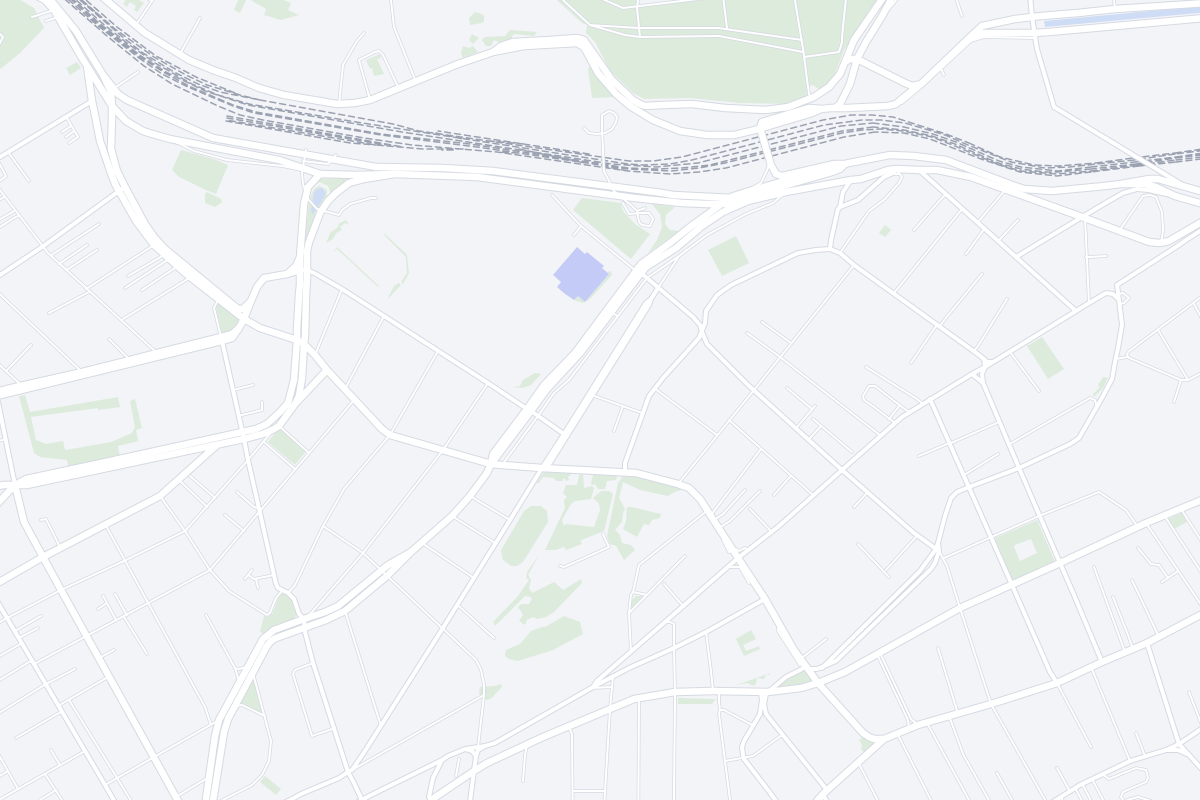
- Maracanã
- Maracanã (Rei Pelé – Maracanã)
- São Cristóvão
- São Francisco Xavier / Tijuca
- Maracanã
- São Cristóvão
Sources
Every fact on this page comes from one of 21 sources, each read and checked in November 2026.
- Maracanã (official stadium portal): Guia do Torcedormaracana.rio.br · in Portuguese · retrieved 16 November 2026
- Wikipedia: Maracanã Stadiumen.wikipedia.org · in English · retrieved 16 November 2026
- Flamengo (Nação Sócio-Torcedor): Termos de usonacao.flamengo.com.br · in Portuguese · retrieved 16 November 2026
- Fluminense (Sócio Futebol): Planos Arquiba e perguntas frequentesnense.com.br · in Portuguese · retrieved 16 November 2026
- Flamengo (Nação Sócio-Torcedor): Nação Maracanacao.flamengo.com.br · in Portuguese · retrieved 16 November 2026
- Viva Maracanã (official Tour Maracanã): Tour Oficial Maracanãvivamaracana.com.br · in Portuguese · retrieved 16 November 2026
Show all 21 sources
- Fluminense: Informações de ingressos para Fluminense x Internacionalfluminense.com.br · in Portuguese · retrieved 16 November 2026
- Maracanã (official stadium portal): Portal Maracanãmaracana.rio.br · in Portuguese · retrieved 16 November 2026
- Viva Maracanã (official Tour Maracanã): Planeje sua visitavivamaracana.com.br · in Portuguese · retrieved 16 November 2026
- MetrôRio: Estação Rei Pelé – Maracanãmetrorio.com.br · in Portuguese · retrieved 16 November 2026
- MetrôRio: Estação São Cristóvãometrorio.com.br · in Portuguese · retrieved 16 November 2026
- Wikidata: Maracanã Stadium (Q155174)wikidata.org · in English · retrieved 16 November 2026
- MetrôRio: Estação São Francisco Xavier / Tijucametrorio.com.br · in Portuguese · retrieved 16 November 2026
- MetrôRio: Estação Carioca / Centrometrorio.com.br · in Portuguese · retrieved 16 November 2026
- MetrôRio: Estação Central do Brasil / Centrometrorio.com.br · in Portuguese · retrieved 16 November 2026
- MetrôRio: Estação Botafogometrorio.com.br · in Portuguese · retrieved 16 November 2026
- OpenStreetMap: Node 712849010: Rei Pelé / Maracanã (metro)api.openstreetmap.org · in English · retrieved 16 November 2026
- OpenStreetMap: Node 712849019: São Cristóvão (metro)api.openstreetmap.org · in English · retrieved 16 November 2026
- OpenStreetMap: Node 710950049: São Francisco Xavier / Tijuca (metro)api.openstreetmap.org · in English · retrieved 16 November 2026
- OpenStreetMap: Node 712849021: Maracanã (train)api.openstreetmap.org · in English · retrieved 16 November 2026
- OpenStreetMap: Node 712849018: São Cristóvão (train)api.openstreetmap.org · in English · retrieved 16 November 2026