Stadium guide · Buenos Aires, Argentina
La Bombonera
Estadio Alberto J. Armando · Boca Juniors
- Capacity
- 58,840
- Opened
- 1940
Tickets
Start from the club’s own arithmetic: Boca says its membership is bigger than La Bombonera, so not every member can attend the same match. The rules the club publishes for getting in are rules for socios, its members.
The club says it has more members than the stadium has places, so not every member can attend the same match.
Boca Juniors
Official- Members
- The club says there are more members than places in the stadium
- Season seats
- Members only; never sold, or handed on for payment
- Lending
- Free, and only to up to six members named to the club in advance
- Joining
- Anyone can apply as an adherente, with ID or a passport
- Adherentes
- Football matches need the board’s express authorisation
- Museum
- Does not sell tickets for any match
- At the gate
- Keep your ticket and DNI or passport to hand
Official routes only. The club says tickets resold on marketplaces are generally not valid, so we do not link to them.
Season seats
The abono, a season seat, is for members whose dues are up to date, in the active, cadet, minor, interior and abroad categories. It covers the men’s first team’s home matches in competitions run by the Argentine FA, the AFA. For CONMEBOL competition matches, the holder has the right to pay a preferential price.
The regulation ties the seat tightly to its holder. An abono can never be sold, or handed on for payment. No third person may use it without the holder’s express authorisation under the club’s lending rules. That authorisation works through a list of up to six members, of any category, sent to the club in advance, who may borrow the seat free of charge. Since every name on that list has to be a member, a visitor without a membership can’t be one of them. For any breach of these obligations the club may cancel the abono, with no compensation.
A holder who can’t go can free the seat for particular matches. The club may then dispose of that seat for the match in question.
Joining as an adherente
Anyone can apply to join as a socio adherente. The application goes in with a national identity document, or a passport where that applies. Don’t treat it as a match ticket, though: adherentes share in the club’s promotions, events and activities, but football matches are the exception, and for those the board must give express authorisation.
Moving up is slow and orderly. Seventy per cent of the places that open up in the membership go to promoting adherentes to the active category. Those promotions follow strict order of seniority.
What not to expect
Don’t ask at the club museum, the Museo de la Pasión Boquense, which sells no tickets for any match. Whatever ticket you hold, carry it with your DNI or passport, since the club tells match-goers to have both to hand at the entrances.
Stadium tour and museum
The Museo de la Pasión Boquense sits under one of the stands, and the stadium visits start from it. There are two ways to see the ground:
- Museum
- Self-guided, organised by themed areas
- Stadium tour
- Guided, 50 minutes
- Express visit
- Guided, 10 minutes through the stands
- Home match days
- Museum hours are cut
- Estadio TourA guided 50-minute route through the plateas, the boxes, the stands and the pitch. The museum’s description of its museum-plus-tour ticket adds the visitors’ changing room.
- Visita expressA guided 10-minute walk through the plateas. You look over the stadium from a panoramic point in the south popular stand.
Inside the museum you set your own pace, through areas organised by theme. Among them are the cups and trophies the club has won, a tribute to Diego Maradona and Esto es Boca, a 360-degree audiovisual show about the club.
Visits run in small groups. Take your booking confirmation and your DNI, because the museum makes both compulsory at the entrance.
Pick a day without a home match. When Boca play at La Bombonera, the museum shortens its hours depending on the kick-off. The first team’s training sessions can also move the opening hours.
Book on the official site: we link straight to it and earn nothing from it.
Where to sit
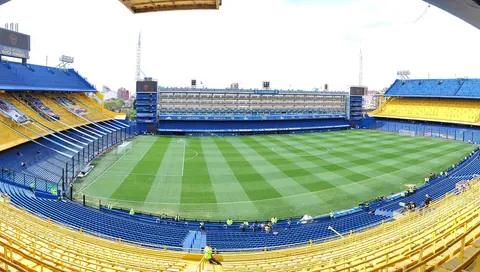
La Bombonera is a horseshoe of three tiers stacked at a steep angle. The city tourism board points out that only a few metres separate the pitch from the stands, so spectators sit close to the teams.
The club names its stands this way:
- Tribunas Sur and NorteThe populares, the two popular stands.
- Plateas bajas y mediasThe lower and middle seated areas.
- Plateas altas and palcos VIPThe upper seated areas and the VIP boxes.
A season seat keeps you in its own sector: holders may not go into other parts of the stands. Season seats in the Sector Dama can be given only to women. A holder may bring in one child under five, who shares the holder’s seat.
| Stand | Who sits there |
|---|---|
| Tribuna popular sur | One of the two popular stands, entered from Brandsen. The express visit views the stadium from here |
| Tribuna popular norte | The other popular stand, entered from Brandsen |
| Plateas bajas y medias | The lower and middle plateas, entered from Brandsen or Avenida del Valle Iberlucea |
| Plateas altas y palcos | The upper plateas and the VIP boxes, entered from Irala next to car park Playa 1 |
| Sector Dama | A season-seat sector open only to women |

Photo: Ministerio de Cultura de la Nación, CC BY-SA 2.0, via Wikimedia Commons
Getting there
Plan on the bus. The museum’s directions list the lines by the street they use:
- CConstitución34 min on footAbout 34 minutes on foot by OpenStreetMap routing
- 254686Calle Brandsen bus stopsLines the museum lists along Calle Brandsen
- 295315216864Avenida Almirante Brown bus stopsBus lines on Almirante Brown
- 22243970Avenida Patricios bus stopsBus lines on Avenida Patricios
- Calle Brandsen25, 46 and 86.
- Avenida Almirante Brown29, 53, 64, 152 and 168.
- Avenida Patricios22, 24, 39 and 70.
Brandsen is the one to aim for: the stadium is at number 805, and the north and south popular stands are entered from it.
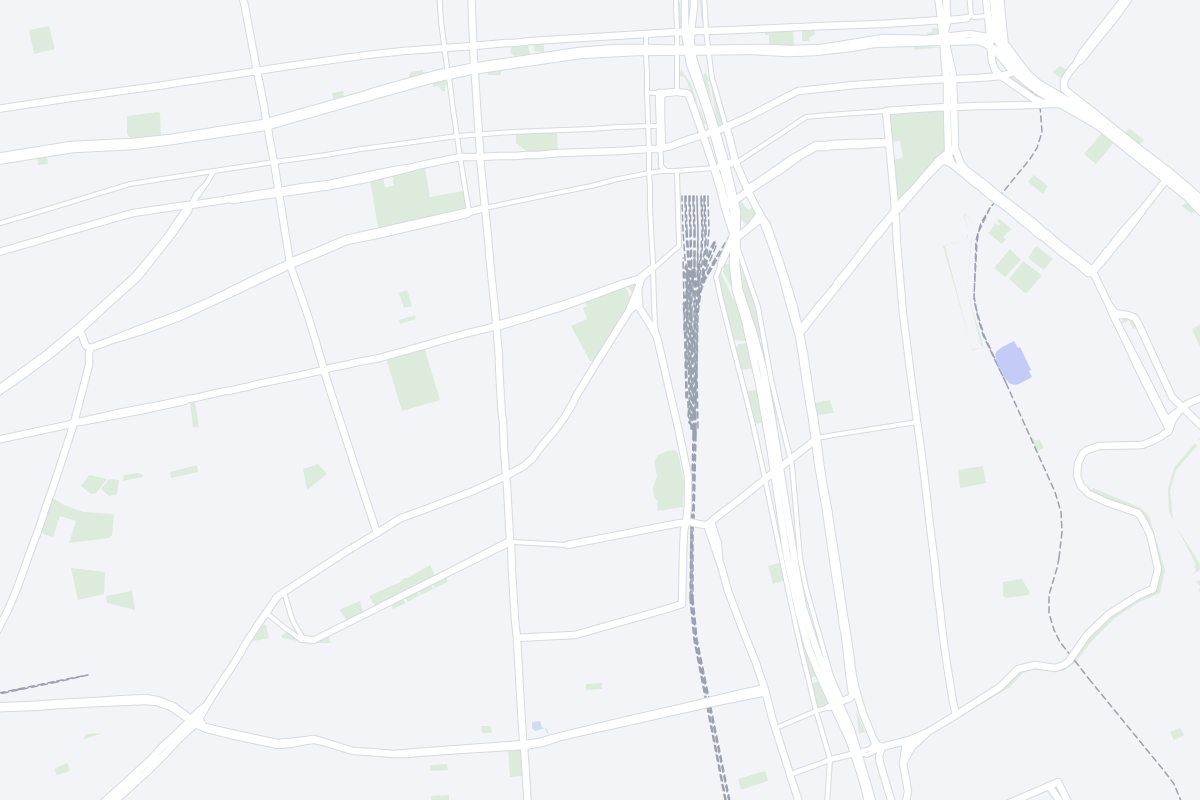
The metro is a long walk away. Constitución, on Line C, is about 2.5 km from the stadium, roughly 34 minutes on foot by OpenStreetMap routing. The club itself sends visitors to Google Maps for directions to the ground.
If you drive, the club lists three car parks around the stadium. Playa 1 is entered from Irala, Playa 2 from España, and Playa 3 from España or Pi y Margall. Playa 1 sits beside the Irala entrance for the upper plateas and VIP boxes.
Where to stay
To be able to walk to the gate, stay in La Boca: the stadium is in the district, at Brandsen 805.
- Area 1
La Boca
The stadium is in La Boca itself, at Brandsen 805.
- Area 2
San Telmo
About 2.5 km from the stadium, roughly 33 minutes on foot by OpenStreetMap routing from the market.
- Area 3
Puerto Madero
About 3.2 km from the stadium, roughly 43 minutes on foot by OpenStreetMap routing from the centre of the district.
The other two bases are a fair walk off, by OpenStreetMap foot routing:
- San TelmoAbout 2.5 km, roughly 33 minutes on foot.
- Puerto MaderoAbout 3.2 km, roughly 43 minutes on foot.
Add that walk to the club’s advice to be at the stadium two hours before the match when you work out when to leave.
Matchday
Get there two hours before the match, as the club asks. Expect security checks at every entrance, and keep your ticket and DNI or passport to hand.
Each part of the ground has its own street:
- Populares, north and southIn from Brandsen.
- Lower and middle plateasIn from Brandsen or Avenida del Valle Iberlucea.
- Upper plateas and VIP boxesIn from Irala, next to car park Playa 1.
The stadium
The foundation stone was laid on 18 February 1938, and the stadium opened on 25 May 1940. Before then, the city tourism board says, Boca played at home in a ground with wooden stands. The design is by the Slovene architect Viktor Sulčič. In the first year the club says it turned the new ground into a fortress, with 13 consecutive official wins and the title at the end.
The ground grew upwards. A second tier on the north side opened on 16 November 1941. The third tier and the floodlights followed in 1953.
Its official name, Estadio Alberto José Armando, dates from 27 December 2000, when it was renamed in honour of the club president. The popular name comes from the shape: the city tourism board likens the steep three-tier horseshoe to a box of chocolates, a bombonera.
Look at the walls as well as the pitch. A mural by Benito Quinquela Martín fills the entrance hall, and the outside carries works by Pérez Celis and Rómulo Macció.
Two records belong to club heroes. Juan Román Riquelme has played the most matches at the stadium, 206, and Martín Palermo has scored the most goals there, 129.

Facts
| Official name | Estadio Alberto J. Armando |
|---|---|
| Also called | Estadio Alberto José Armando, Bombonera |
| Club | Boca Juniors |
| City | Buenos Aires, Argentina |
| Opened | 1940 |
| Capacity | 58,840 |
| Stations | Constitución (34 min on foot), Calle Brandsen bus stops, Avenida Almirante Brown bus stops, Avenida Patricios bus stops |
| Coordinates | -34.63565, -58.36465 |
In our lists
- The biggest football stadiums — 26th of 112 by capacity
- The oldest football grounds — 48th of 112 by age
- Stadium tours and museums
- Clubs where members buy first
Map
- La Bombonera
- Constitución
Nearby stadiums
El Monumental
Buenos Aires · 13 km away


Sources
Every fact on this page comes from one of 14 sources, each read and checked in November 2026.
- Club Atlético Boca Juniors: La Bombonerabocajuniors.com.ar · in Spanish · retrieved 16 November 2026
- Club Atlético Boca Juniors: Reglamento de abonos (PDF)drive.google.com · in Spanish · retrieved 16 November 2026
- Ente de Turismo de la Ciudad de Buenos Aires: Estadio de Boca Juniors, La Bomboneraturismo.buenosaires.gob.ar · in Spanish · retrieved 16 November 2026
- Wikipedia: Estadio Alberto J. Armandoes.wikipedia.org · in Spanish · retrieved 16 November 2026
- Club Atlético Boca Juniors: Reglamento de adherentes y de incorporación de socios (PDF)drive.google.com · in Spanish · retrieved 16 November 2026
- Museo de la Pasión Boquense: Museo de la Pasión Boquensemuseoboquense.com · in Spanish · retrieved 16 November 2026
Show all 14 sources
- Museo de la Pasión Boquense: Preguntas frecuentesmuseoboquense.com · in Spanish · retrieved 16 November 2026
- Museo de la Pasión Boquense: Información útilmuseoboquense.com · in Spanish · retrieved 16 November 2026
- Wikidata: Estadio Alberto J. Armando (Q499855)wikidata.org · in English · retrieved 16 November 2026
- Museo de la Pasión Boquense: El Museomuseoboquense.com · in Spanish · retrieved 16 November 2026
- Wikidata: Constitución, Línea C (Q2995069)wikidata.org · in English · retrieved 16 November 2026
- OpenStreetMap (OSRM foot routing): Foot route between the stadium and Constitución metro stationrouting.openstreetmap.de · in English · retrieved 16 November 2026
- OpenStreetMap (OSRM foot routing): Foot route from San Telmo market to the stadiumrouting.openstreetmap.de · in English · retrieved 16 November 2026
- OpenStreetMap (OSRM foot routing): Foot route from Puerto Madero to the stadiumrouting.openstreetmap.de · in English · retrieved 16 November 2026