Stadium guide · Pamplona, Spain
El Sadar
Estadio El Sadar · Osasuna
- Capacity
- 23,500
- Opened
- 1967
Tickets
Buy on the club’s website: the club says match tickets are sold only there. Members come first, because each match opens with a priority sale for members and holders of the club’s cards.
The club sells match tickets only through its website, members first.
Osasuna
Official- Where
- The club’s website only
- Members
- Priority sale for members and card holders first
- General sale
- Opens after the priority sale and runs until kick-off
- Members’ seats
- Members can release a seat through the member area
The general sale follows the priority sale and stays open until kick-off, so a visitor can still buy once members have had their turn. Members who cannot attend can release their seat through the member area of the website.
Stadium tour and museum
The club runs a full tour of the stadium and sells tickets for it online. The tour page gives it as one hour long.
- Duration
- One hour
- Booking
- Online, on the club’s tour site
Book on the official site: we link straight to it and earn nothing from it.
Where to sit
One whole stand has rail seats, which let you watch the match standing. The club counts 1,200 of them.
Getting there
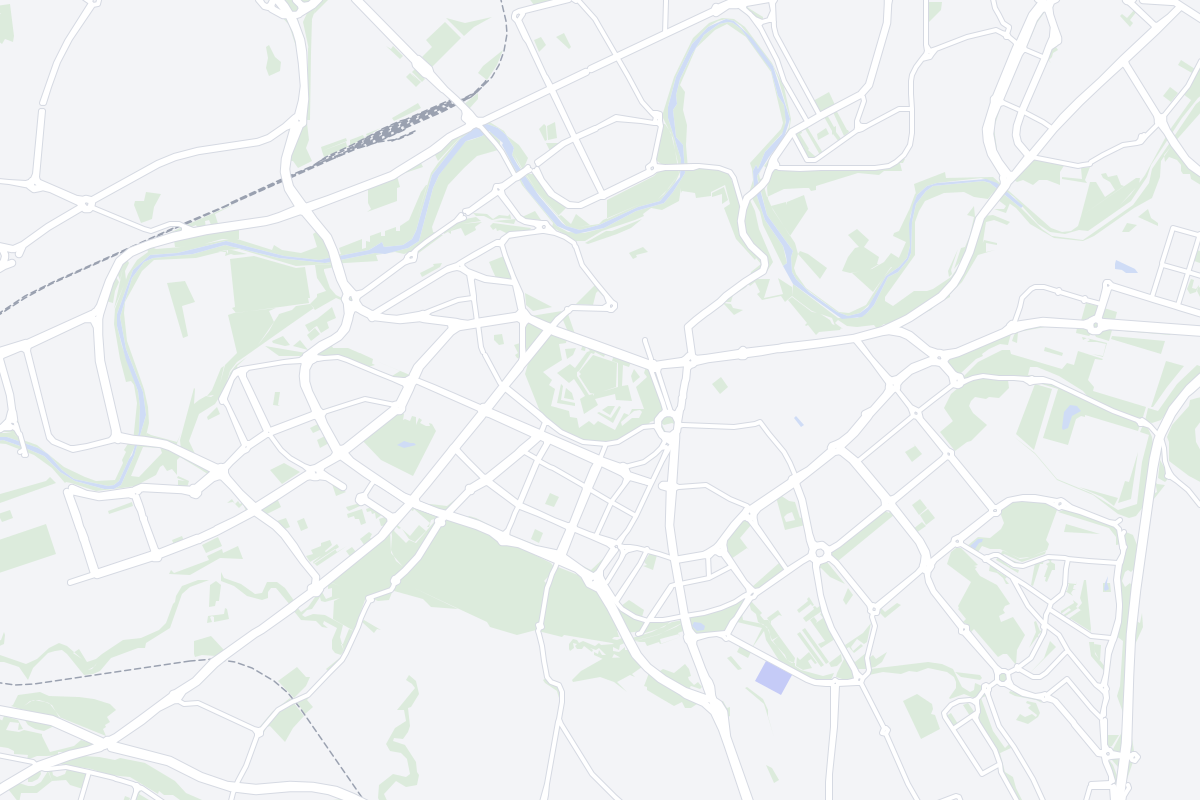
Treat the ground as a bus or taxi trip from the centre, not a walk: LaLiga’s stadium guide puts the railway station 4.2 km away. The address to give a driver is Calle Sadar, 31006 Pamplona. From the station, the city says the centre is a 30-minute walk, with city bus line 9 connecting the two. If you fly in, the airport is at Noáin, 7 km from the centre.
Don’t count on driving up to the ground: the city closes the roads into Calle Sadar to traffic two hours before kick-off, and only public transport and emergency services may then use them. Parking is banned on Calle Sadar and Calle Ana de Velasco on the side nearest the stadium, and on all of Calle Eladio Cilveti. The city recommends parking around the UPNA and UNED university sites or in the Arrosadía and Soto de Lezkairu districts.
Leave on foot, and expect the roads to close again 30 minutes before the end of the match. Keep off the roadway of Avenida Zaragoza afterwards, because the city keeps people on foot off it.
- TrainPamplonaMain station, 4.2 km from the ground
Where to stay
Stay in the Casco Antiguo if you want the historic centre: the railway station is 30 minutes on foot from it. Don’t count on driving in, because a low-emission zone restricts access to the old town.
- Area 1
Casco Antiguo
The historic centre, about 30 minutes on foot from the railway station, with driving restricted by a low-emission zone.
- Area 2
Segundo Ensanche
The 19th-century extension next to the old town, which the city counts among its main commercial and social zones.
The Segundo Ensanche suits a different stay: the city describes it as one of its main commercial and social zones.
Matchday
Leave heavy objects at your hotel: the stadium rules bar anything over 500 g that could be used as a projectile. Don’t carry alcohol in, because the rules bar bringing in alcoholic drinks.
The stadium
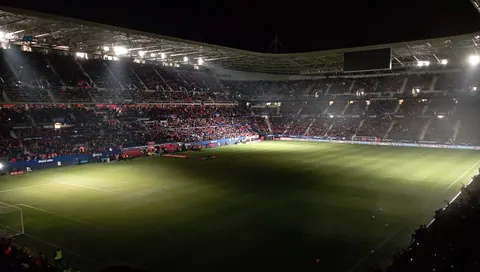
El Sadar opened on 2 September 1967, after the club played its last match at its old San Juan ground in May that year. It held 25,000 people at the start, 7,000 of them seated. A new stand in 1989 took the capacity to 30,000, and it was cut back to 20,000 when UEFA required all-seated stadiums.
The capacity had fallen to about 18,500 before the latest reform. The reform began in June 2019, and the club says it took barely a year and a half. It kept the structure of the 1967 stadium and the 1989 stand and added a new ring of seating above, which brought the capacity to 23,500. Every seat was replaced, and a new roof evens out the height of the whole stadium.
The club says its members chose the design by vote, a first in professional football.

Facts
| Official name | Estadio El Sadar |
|---|---|
| Also called | Sadar Stadium, Reyno de Navarra |
| Club | Osasuna |
| City | Pamplona, Spain |
| Opened | 1967 |
| Capacity | 23,500 |
| Station | Pamplona |
| Coordinates | 42.79667, -1.63694 |
In our lists
- La Liga stadiums 2026–27 — 15th of 20 by capacity
- The biggest football stadiums — 88th of 112 by capacity
- The oldest football grounds — 61st of 112 by age
- Stadium tours and museums
- Clubs where members buy first
Map
- El Sadar
- Pamplona
Nearby stadiums
Anoeta
San Sebastián · 62 km away

Mendizorroza
Vitoria-Gasteiz · 86 km away

San Mamés
Bilbao · 119 km away


Sources
Every fact on this page comes from one of 10 sources, each read and checked in November 2026.
- CA Osasuna: Reforma de El Sadarosasuna.es · in Spanish · retrieved 18 November 2026
- Ayuntamiento de Pamplona: Ordenación del tráfico durante los encuentros de fútbol del Club Atlético Osasuna en el Sadarpamplona.es · in Spanish · retrieved 18 November 2026
- CA Osasuna: Historia de El Sadarosasuna.es · in Spanish · retrieved 18 November 2026
- Ayuntamiento de Pamplona: Guía de Pamplonapamplona.es · in Spanish · retrieved 18 November 2026
- CA Osasuna: A la venta las entradas para el encuentro ante el Racing en El Sadarosasuna.es · in Spanish · retrieved 18 November 2026
- LaLiga: Cómo llegar al estadio: El Sadarfiles.laliga.es · in Spanish · retrieved 18 November 2026
Show all 10 sources
- Wikidata: El Sadar Stadium (Q735783)wikidata.org · in English · retrieved 18 November 2026
- CA Osasuna: El Sadarosasuna.es · in Spanish · retrieved 18 November 2026
- Wikidata: Pamplona train station (Q3394058)wikidata.org · in English · retrieved 18 November 2026
- CA Osasuna: Tour El Sadartourelsadar.osasuna.es · in English · retrieved 18 November 2026